
 Pin It
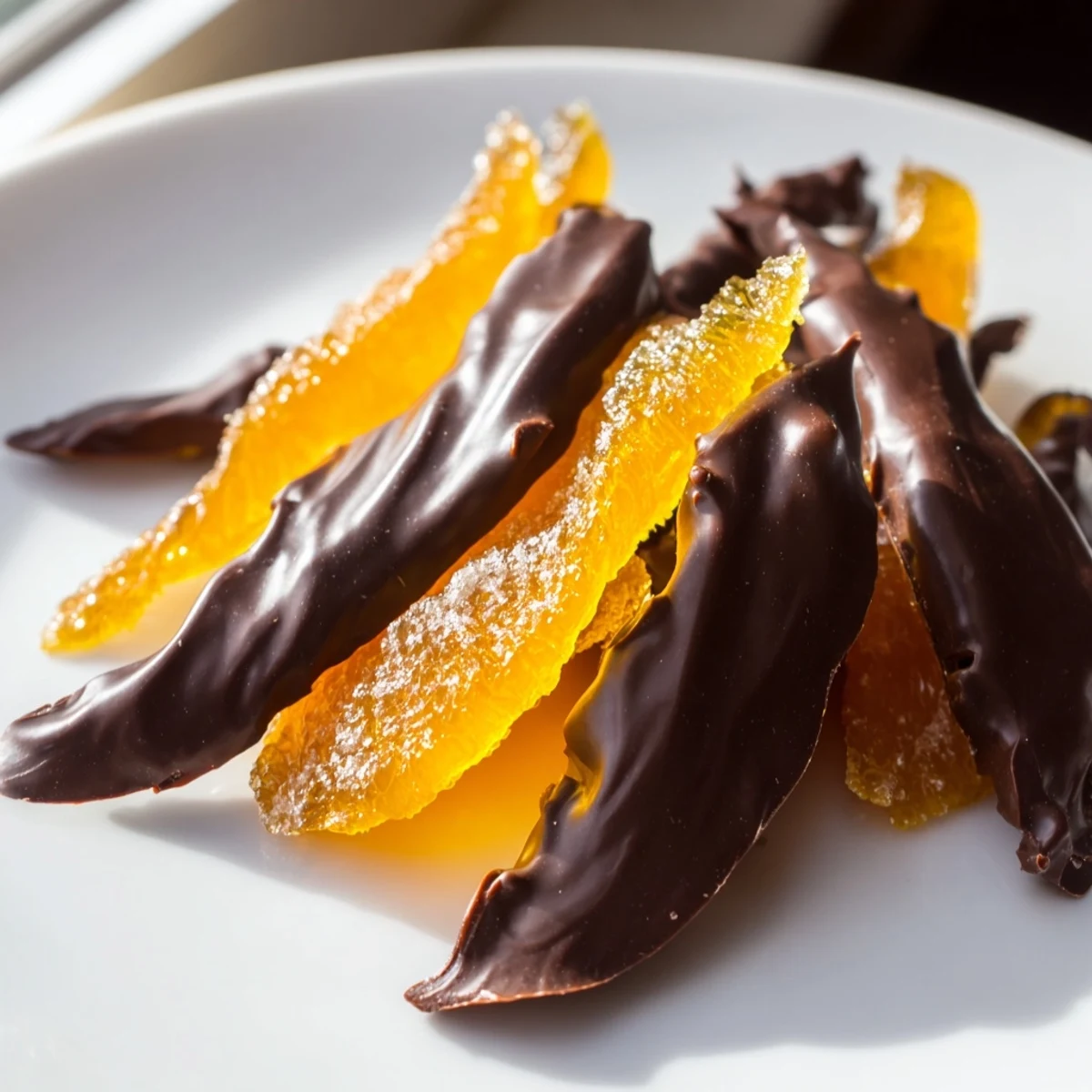
 These chocolate covered orange peels transform simple citrus into an elegant confection. Fresh orange peel strips are blanched three times to remove bitterness, then slowly simmered in sugar syrup until translucent and tender. Once dried, each strip is dipped halfway into melted dark chocolate and left to set.
The result is a beautiful balance of sweet candied citrus and bittersweet chocolate. They keep for up to two weeks in an airtight container, making them ideal for homemade gifts, holiday treats, or an after-dinner indulgence alongside espresso.
The smell of orange oil bursting from a freshly scored peel is one of those small kitchen thrills that makes you stop what you are doing and just breathe. I discovered these chocolate covered orange peels during a rainy Sunday when I had three oranges sitting on the counter and nothing but time. Something about turning scraps into candy felt like a quiet magic trick. By the time the chocolate set, I was already hooked.
I brought a tin of these to a friends dinner party once and watched everyone ignore the store bought desserts in favor of peeling back parchment paper to grab one more strip. My friend Sarah now texts me every December asking for the recipe. She claims they disappear faster than cookies.
Ingredients
- 3 large oranges, preferably organic: Since you are eating the peel, organic matters more here than almost anywhere else in your kitchen.
- 2 cups granulated sugar: This creates the syrup that transforms bitter peel into something jewel like and tender.
- 1 cup water: Combined with the sugar to form a simple syrup bath for candying.
- 200 g dark chocolate, 60 to 70 percent cocoa: The slight bitterness of good chocolate balances the sweetness perfectly, so do not skimp on quality here.
Instructions
- Score and strip the peels:
- Wash the oranges well, slice off the top and bottom of each one, then score the skin into four sections and peel them away with your thumbs, keeping a little white pith attached for texture.
- Cut into strips:
- Slice each piece of peel into strips about half a centimeter wide, try to keep them fairly even so they all candy at the same rate.
- Blanch three times:
- Drop the strips into a saucepan of cold water, bring it to a full boil, then drain completely and repeat two more times until the kitchen smells less sharp and more floral.
- Candy in syrup:
- Dissolve the sugar and water together over medium heat, slide in the blanched peels, and let them simmer uncovered for 45 to 60 minutes, stirring now and then, until they turn translucent and look like tiny amber windowpanes.
- Dry on a rack:
- Lift the peels out with tongs and spread them across a wire rack, leaving them at room temperature for at least two hours or ideally overnight until they lose their stickiness.
- Melt the chocolate:
- Set a heatproof bowl over a pot of barely simmering water, add the chopped chocolate, and stir gently until it melts into a glossy pool with no lumps remaining.
- Dip and set:
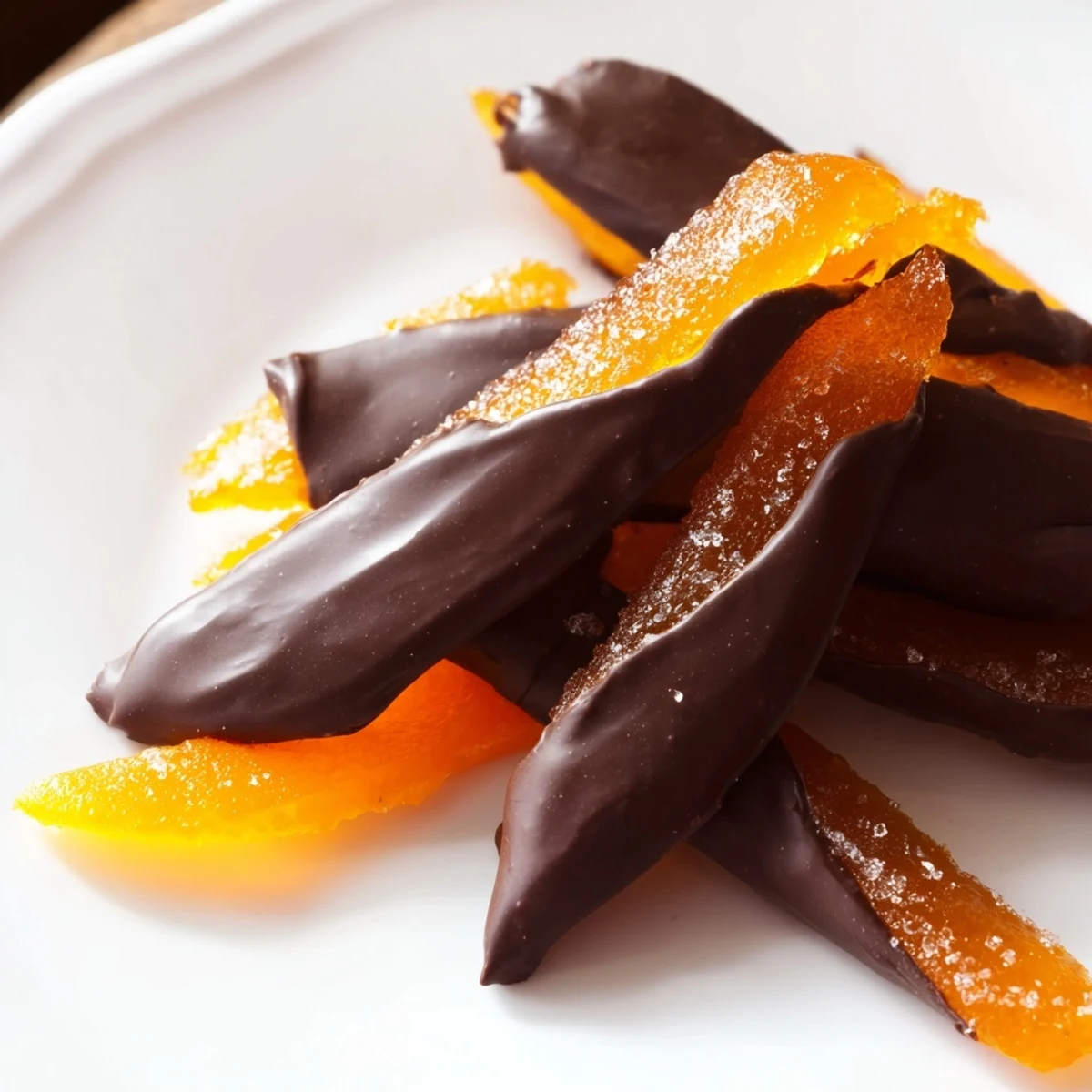
- Take each candied strip and dip it halfway into the chocolate, letting the extra drip back into the bowl before placing it on parchment paper to firm up at room temperature or in the fridge if you are impatient.
 Pin It
 There is a specific kind of pride that comes from offering someone a candy you made from something most people throw away.
Getting the Texture Right
The difference between leathery and tender comes down to simmer time. If you pull the peels too early they stay tough, but if you let them go the full hour they develop that satisfying gentle chew. I usually fish one out at the 45 minute mark, let it cool for a minute, and bite into it to test.
Choosing Your Chocolate
Anything between 60 and 70 percent cocoa works beautifully here. Go much darker and the chocolate overwhelms the orange. Drop below 60 percent and the whole thing becomes cloying. A good quality bar from the baking aisle is perfectly fine, no need to hunt down anything artisanal unless you want to.
Storage and Gift Giving
Layer the finished peels between sheets of parchment in a sealed container and they stay lovely for two full weeks. They also freeze surprisingly well for up to three months.
- A small tin packed with these makes a gift that looks far more impressive than the effort it took.
- Tie a ribbon around a cellophane bag of them for an easy holiday present.
- Always store them somewhere cool and dry because humidity is the enemy of that smooth chocolate finish.
 Pin It
 Once you make these once, you will start saving orange peels without even thinking about it. That is really the highest compliment a recipe can earn.
Recipe FAQs
- → Do I need to remove all the white pith from the orange peels?
-
No, leaving a thin layer of white pith is actually desirable. It adds a pleasant texture and slight bitterness that pairs well with the sweet syrup and dark chocolate. Just avoid thick, spongy portions of pith.
- → Why do I need to blanch the peels three times?
-
Repeated blanching draws out the bitter compounds from the orange peels. Each boil-and-drain cycle mellows the bitterness, resulting in candied peels that are sweet and pleasantly tangy rather than harsh.
- → Can I use milk or white chocolate instead of dark chocolate?
-
Yes, you can substitute milk or white chocolate for a sweeter, milder coating. Keep in mind that milk and white chocolate are softer at room temperature, so you may want to store them in the refrigerator.
- → How long should the candied peels dry before dipping in chocolate?
-
Allow the peels to dry on a wire rack for at least 2 hours at room temperature. For best results, let them dry overnight. They should no longer feel sticky or tacky to the touch before you dip them in chocolate.
- → What type of oranges work best for this?
-
Large, thick-skinned oranges are ideal because they yield more peel and are easier to handle. Organic oranges are recommended since you are using the exterior of the fruit. Navel oranges work particularly well.
- → How should I store chocolate covered orange peels?
-
Store them in an airtight container in a cool, dry place for up to two weeks. If your kitchen is warm, refrigerate them to prevent the chocolate from blooming. Allow them to come to room temperature before serving for the best flavor and texture.